 Fix first
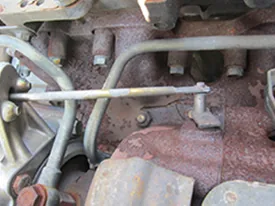
Turbo actuator stuck
Turbo actuator stuck on this truck.
Auto Inspectors books independent pre-purchase inspections in Hawaii, mainly on Oahu and, where an inspector is available, on the neighbor islands. You get a written report with photos. Hawaii has two rules worth knowing first: every car needs a current safety inspection to change hands, and dealers must give a written warranty on many newer used cars.
By Auto InspectorsUpdated
| Safety inspection | Annual; new cars get two years first |
|---|---|
| Title transfer deadline (Oahu) | 30 days from the seller's date of transfer; $10 fee, $50 penalty if late |
| Dealer warranty, under 25,000 miles | 90 days or 5,000 miles |
| Dealer warranty, 25,000 to 49,999 miles | 60 days or 3,000 miles |
| Dealer warranty, 50,000 to 75,000 miles | 30 days or 1,000 miles |
| No dealer warranty required | Under $1,500, over 75,000 miles, or 5+ years old |
| Dealer damage disclosure | Known damage over $1,000 and whether the dealer inspected the car |
Our inspectors work across the whole state. Pick your area, or just enter the ZIP code where the car is in the form.
Not on the list? We still cover it. Every ZIP code in Hawaii is in our area.
Registration in Hawaii is run by each county: Honolulu, Maui, Hawaii County and Kauai. On Oahu, the buyer brings the endorsed title, the last registration and a current Hawaii safety inspection certificate to a satellite city hall within 30 days of the seller's transfer date. The fee is $10; miss the 30 days and a $50 penalty is added. If the registration is about to expire, you pay the renewal too. The seller files a notice of transfer.
Honolulu recommends that buyer and seller go to the appointment together, and that is the easiest way to catch a title problem before money changes hands. Appointments are booked online, and ownership transfers are not handled at the express window.
Hawaii is one of the few states with a periodic safety inspection. Most cars need one every year; new cars get an initial two-year certificate. Inspections are done at licensed stations, usually repair shops and service stations, and the emblem goes on the back of the car. You need a current certificate to transfer ownership, so a car without one is either overdue or has a problem.
A safety pass is real value, but it is a minimum standard checked in a few minutes. It does not judge engine wear, transmission health or rust that has not yet reached a structural point, and the station may also be the shop selling you the car. A pre-purchase inspection by someone working only for you fills those gaps.
Cars shipped from the mainland. Cars arrive in Hawaii by ship from West Coast ports, and plenty of buyers find a better price on the mainland and ship it over. Before a shipped car can be registered, it needs a Hawaii safety inspection and the out-of-state title. Shipping is expensive and one-way in practice, so do not ship first and inspect later. Have the car inspected on the mainland where it sits; the out-of-state guide covers the steps.
The opposite also happens: island cars shipped to the mainland when owners or military families move. If you are buying a car that spent years on Oahu, assume salt exposure and look underneath.
Total losses and rebuilt cars. Hawaii's insurers total cars the same way mainland insurers do, and title brands from other states follow a car across the Pacific. A total-loss car that was repaired will be harder to insure and resell, and Hawaii's dealer warranty law does not cover inoperable total losses with frame or suspension damage. On a rebuilt car, ask for the repair records and photos, run a title history check, and read our salvage title guide before you buy.
Hawaii requires dealers to give a written warranty covering full parts and labor on major systems: engine, transmission, drive axle, brakes, radiator, steering, alternator, starter and ignition. The length depends on mileage at sale: 90 days or 5,000 miles under 25,000 miles, 60 days or 3,000 miles up to 50,000, and 30 days or 1,000 miles up to 75,000. If the dealer fails to fix the same defect in three tries, or the car is out of service more than 10 business days, you can ask for a refund.
The law does not apply to cars under $1,500, over 75,000 miles, or five years old or older, which covers a lot of the island market. Those cars can be sold "As Is" only with a boxed disclaimer on the contract that you sign. Dealers must also tell you in writing about known damage costing more than $1,000 to repair and whether they inspected the car. Private sales get none of this. As-is and warranties explains how this sits with federal rules.
Island cars rust from the top and the bottom. Trade winds carry salt spray far inland on windward Oahu and along most coasts, and on the Big Island volcanic vog adds acidic moisture. Check brake lines, the underbody, door bottoms and the hood edges. Constant sun fades paint, cracks dashboards and cooks rubber seals.
Island driving is mostly short trips, which leaves moisture in engines and exhaust systems, and steep roads on Maui and Kauai work brakes hard. The August 2023 Lahaina fire burned and smoke-damaged many vehicles on Maui. Former rental cars make up a big share of the used supply; they are usually newer, but check for curb damage, worn interiors and sand in every crevice.
All three major auction companies are on Oahu. Copart and IAA both have yards in Kapolei, and Manheim Hawaii runs dealer sales in Honolulu. Rental fleets and insurance write-offs feed most of the volume. See the auction guide for what you can inspect before bidding.
Share the listing and the car's location. On Oahu an inspector can reach the car from Honolulu and Kapolei to Kaneohe, Kailua and the North Shore, and you get the report with photos. For Maui, the Big Island and Kauai, give us the island and town first, and we will tell you straight whether someone can get there.
Ask the seller for the current safety certificate, whether the car was a rental and where it was usually parked. On the mainland, mobile inspections are commonly listed at $210 to $449 by vehicle type; island pricing can differ, which is why you get a quote before anything is booked. Book the inspection when you are ready.
Booking an inspection in Hawaii takes a few minutes. The inspector does the rest.
Where it is, what it is and who is selling it. A link to the listing helps.
A local inspector confirms the price and the visit with you, and with the seller if you want.
Body and paint, underneath, under the hood, a computer scan and a road test where the seller allows it.
A written report with photos, and a call to talk it through before you pay for the car.
Every system gets a plain verdict, with photos of anything that needs attention. Below the example are real faults found on other inspections.
Fix firstTurbo actuator stuck on this truck.
 Fix first
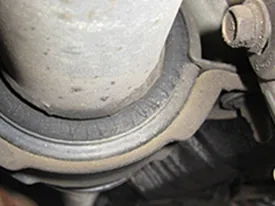
Mid shaft bearing rubber worn out, bad, drive shaft loose.
 Fix first
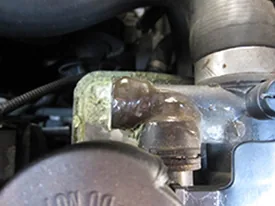
Radiator broken, repaired, and still leaking antifreeze.
Letters from customers of ACE Auto Inspectors, the Metro Atlanta mobile inspection service this site grew out of.
Once again... thanks so much for your hard work and mechanical diligence. The peace of mind knowing that we got a great car is worth the extra step. I will forward your name to other folks and friends I know who are looking for new cars.
My inspection experience with Ron & Nan was very informative. Ron is very knowledgeable in the auto industry, he fine tunes all facets of the vehicle, body, mechanical, paint, etc.
Buying across the state line? Each page covers that state's title, inspection and warranty rules.
Yes. The buyer must present a current Hawaii safety inspection certificate to transfer ownership. Inspections are required every year, except new cars, which get two years first.
It depends on mileage: 90 days or 5,000 miles under 25,000 miles, 60 days or 3,000 miles up to 50,000, 30 days or 1,000 miles up to 75,000. Cars over 75,000 miles, under $1,500 or five years and older are exempt.
It can be a fair buy, since rentals are usually newer and serviced. Have it checked for curb damage, worn brakes and tires, sand and salt underneath, and any accident repairs.
Sometimes, if the price gap covers shipping. Have it inspected in California first, because a problem found after it lands in Honolulu is expensive to fix or send back.
What an inspection can't do. An inspection reports what can be seen and tested on the day, without taking the car apart. It can't promise that nothing will fail later, and it is not a warranty. Hidden frame repairs, intermittent faults and wear inside the engine or gearbox may not show.