 Watch
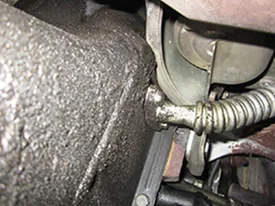
Turbo oil return line leaking
Turbo oil return line, leaking oil at gasket, front and rear turbos.
Auto Inspectors books independent pre-purchase inspections across Kansas, from Johnson County to Garden City. A local inspector goes out to the car, and the written report with photos lands in your inbox. Kansas has no safety or emissions test, but it gives buyers something most states do not: a dealer cannot legally strip away the implied warranty that a car is fit to drive.
By Auto InspectorsUpdated
| Registration deadline | 60 days from transfer; temporary registration needed to drive meanwhile |
|---|---|
| VIN inspection required | Out-of-state or foreign title, rebuilt or reconstructed cars, doubtful VIN |
| VIN inspection fee | $20 regular; $25 salvage |
| Salvage inspections | Only at Kansas Highway Patrol VIN stations |
| Emissions testing | Not required in Kansas |
| Implied warranty disclaimers | Void in consumer sales, except defects the buyer knew of |
| Safety inspection | None |
Our inspectors work across the whole state. Pick your area, or just enter the ZIP code where the car is in the form.
Not on the list? We still cover it. Every ZIP code in Kansas is in our area.
Kansas titles and tags are handled at the county treasurer's office for the Department of Revenue. When you buy a car, from a dealer or a private seller, you have 60 days, weekends and holidays included, to apply for registration. The catch is that you may not drive it on public roads during those 60 days unless you have a temporary registration from the county treasurer or the dealer.
Sales tax is collected by the dealer or paid at the treasurer's office in a private sale, and Kansas also charges annual property tax on the vehicle with each registration, so a newer car costs more to tag every year. If the car came from another state, the VIN inspection fee is collected at the same counter.
Kansas has no periodic safety inspection, and the Highway Patrol states plainly that the state does not require emissions testing. Kansas City-area buyers sometimes confuse this with Missouri, which has its own rules across State Line Road.
The only state check most used cars get in Kansas is the VIN inspection, and only when the title comes from somewhere else. It confirms identity, not condition. The Highway Patrol publishes its own guide to researching a used car and avoiding buyer scams; a pre-purchase inspection is the mechanical half of that research.
The Highway Patrol VIN inspection. A Kansas VIN inspection is required when the car has a title from another state or a foreign country, has been assembled or rebuilt from more than one vehicle, or has a VIN in doubt. A brand-new car on a manufacturer's certificate of origin does not need one. Regular inspections are done at KHP stations and designee locations such as some sheriff's offices, cost $20, and the car has to be at the station; an unregistered car must be towed or trailered in.
Bring the car, the original signed title, the purchase documents and a government ID. Paperwork with white-out or alterations gets rejected. Many Kansas buyers shop in Missouri, Oklahoma, Nebraska and Colorado; inspect before you pay, and see the out-of-state guide for the order of steps.
Salvage and rebuilt salvage. A car with a Kansas salvage title must be inspected at a Kansas Highway Patrol VIN station, not at a sheriff's office or other designee, before it can be titled as rebuilt salvage. The fee is $25. Expect to bring original receipts for every part bought and replaced, the repair work order, photos of the damage before repair and paperwork for any used parts.
That list is useful to you as a buyer. Ask the seller of a rebuilt Kansas car for the same records. If they cannot produce before-repair photos and receipts, you are taking the repair on faith. The KHP check is about stolen parts and identity, not the quality of the structural work, so read our salvage title guide too.
Kansas has no used-car lemon law, but its Consumer Protection Act does something unusual. In a consumer sale, a supplier may not exclude, modify or limit the implied warranties of merchantability and fitness, and any disclaimer that tries is void. A dealer can limit the warranty only for a defect the buyer knew about and that became part of the bargain. A dealer may still use the federal Buyers Guide, but an "As Is" box does not erase this protection.
Merchantability is a basic standard, not a promise that nothing will break, and you may have to press the claim yourself. A private seller who is not in the business generally makes no such warranty. If a dealer points out a defect, make sure it is written down specifically. See as-is and warranties.
Kansas sits in hail alley. Spring and early summer storms regularly dent hoods and roofs across Wichita, Salina and the western half of the state, so repaired hail cars and hail-totaled salvage cars are common. Tornadoes add debris damage; the 2007 Greensburg tornado leveled almost an entire town.
Rural Kansas runs on gravel and dirt section roads. Expect paint chips, cracked windshields, worn ball joints and dust everywhere on farm pickups, and check hitches and transmissions on trucks that haul grain trailers or cattle. Winters bring salt and ice to I-70, I-35 and the Kansas City suburbs, though less than farther north. Summer heat and constant wind are hard on batteries, cooling systems and paint.
Copart has yards in Kansas City, Kansas, and Wichita. IAA runs branches in Kansas City, Kansas, and in Park City near Wichita. There is no Manheim site in Kansas itself; Manheim Kansas City is across the line in Missouri. A salvage car bought at either yard must go to a KHP station for inspection. See the auction guide.
Send the listing and the address. A local inspector meets the car, in an Olathe driveway or on a Wichita lot, and sends the report with photos. Overland Park, Lenexa, Kansas City, Topeka, Lawrence, Manhattan, Salina, Hutchinson, Garden City, Dodge City and Hays are all covered.
Ask whether the car has had hail repair, how much gravel it has seen, and whether the title is from Kansas or another state. Mobile inspections generally list for about $210 to $449 by vehicle type; nothing is booked until you have seen and accepted our quote. Book the inspection when ready.
Booking an inspection in Kansas takes a few minutes. The inspector does the rest.
Where it is, what it is and who is selling it. A link to the listing helps.
A local inspector confirms the price and the visit with you, and with the seller if you want.
Body and paint, underneath, under the hood, a computer scan and a road test where the seller allows it.
A written report with photos, and a call to talk it through before you pay for the car.
Every system gets a plain verdict, with photos of anything that needs attention. Below the example are real faults found on other inspections.
WatchTurbo oil return line, leaking oil at gasket, front and rear turbos.
 Fix first
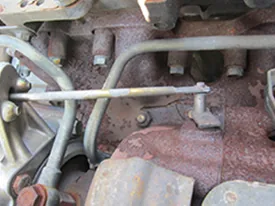
Turbo actuator stuck on this truck.
 Fix first
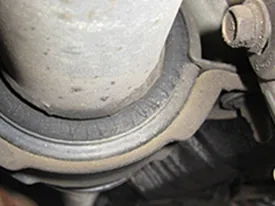
Mid shaft bearing rubber worn out, bad, drive shaft loose.
Letters from customers of ACE Auto Inspectors, the Metro Atlanta mobile inspection service this site grew out of.
I was thoroughly impressed with the services of Ace Auto Inspection. I located a car in the Atlanta area, contacted ACE and, within 24 hours, my inspector, Ron, was on site and evaluating the vehicle. […]
Thank you Ron for being so helpful, explaining to both Timi and I what you were doing, why and the suggested fix.
Buying across the state line? Each page covers that state's title, inspection and warranty rules.
A dealer can post an As Is Buyers Guide, but Kansas law voids attempts to disclaim implied warranties in consumer sales. A dealer can exclude only a defect you knew about and accepted as part of the deal.
Sixty days, counting weekends and holidays. You cannot drive it on public roads during that time without a temporary registration.
At a Kansas Highway Patrol VIN station or a designee location. It costs $20, collected by the county treasurer if done at a KHP station. Salvage cars must go to a KHP station and cost $25.
No. Kansas does not require emissions testing anywhere, and it has no safety inspection.
What an inspection can't do. An inspection reports what can be seen and tested on the day, without taking the car apart. It can't promise that nothing will fail later, and it is not a warranty. Hidden frame repairs, intermittent faults and wear inside the engine or gearbox may not show.