 Watch
Turbo oil return line leaking
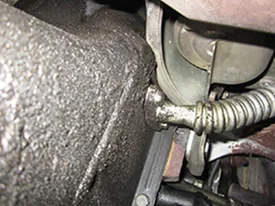
Turbo oil return line, leaking oil at gasket, front and rear turbos.
Need a used car checked in Kentucky? We arrange an independent inspector who drives to the car, whether it sits on a Louisville dealer lot or in a private seller's driveway in Pikeville, and sends you a written report with photos. Kentucky has no yearly safety or emissions test, so for a car already titled here, nobody official ever looks at the brakes, tires or frame before you buy it.
By Auto InspectorsUpdated
| Where you title | County clerk's office in your county |
|---|---|
| Deadline to transfer title | 15 days from purchase |
| Motor vehicle usage tax | 6% of retail price, paid at the clerk |
| Notary on title | Required for the seller's signature |
| Safety or emissions inspection | None for private passenger cars |
| Out-of-state car | Sheriff's inspection by a certified inspector, $15 (plus $20 if the inspector travels) |
| Salvage threshold | Repair cost over 75% of retail value |
| Water damage brand | Submerged above the dashboard, whatever the repair cost |
| Used-car lemon law | None; the lemon law covers new vehicles only |
Our inspectors work across the whole state. Pick your area, or just enter the ZIP code where the car is in the form.
Not on the list? We still cover it. Every ZIP code in Kentucky is in our area.
Everything runs through the county clerk. The seller signs the back of the Kentucky title in front of a notary, and only the seller can write in the odometer reading. If the mileage was entered wrong, the fix is a separate form (TC 96-322), so check the number against the dash before anyone signs.
You then have 15 days to transfer the title into your name. The clerk collects the 6% motor vehicle usage tax on the retail price at that visit. If a buyer never shows up, the seller can file an affidavit that blocks registration on the car, which is one more reason not to let a deal drift.
Buying from a dealer is simpler on paper, because the dealer handles the title work and temporary registration. A private sale puts the paperwork on you. Kentucky residents can't use transit tags; those are for out-of-state buyers, cost $5 and last 15 days.
Kentucky does not run a periodic safety inspection or an emissions test for private cars. Northern Kentucky's old emissions program ended years ago, and nothing replaced it. A car can change hands in Bowling Green or Ashland with bald tires and a rusted brake line, and the clerk will still title it.
The one inspection people do meet is the sheriff's, and that is for cars arriving from other states. It confirms the VIN and paperwork. It says nothing about the engine, the frame or whether the car was ever under water. That is the gap a pre-purchase inspection fills.
Bringing a car in from another state. Before the clerk will title a car from out of state, you need proof of a passed sheriff's inspection and form TC 96-182. The inspection is done by a certified inspector designated by the county sheriff. The fee set in state law is $15 for an individual, plus $20 if the inspector drives out to the car.
Lots of Kentucky buyers shop across the river in Cincinnati, Evansville or Huntington. If the car is still in the other state, book the pre-purchase inspection there, before you pay and tow it home. Our out-of-state buying guide covers the timing.
Salvage, rebuilt and water-damaged titles. A Kentucky car becomes salvage when the repair cost is more than 75% of its retail value. Water damage has its own rule: if the car was submerged above the dashboard, it is branded no matter what the repair estimate says. The brands you will see are SALVAGE, rebuilt vehicle, water damaged and junk.
Kentucky's lemon law applies to new vehicles only. There is no used-car lemon law, and dealers can sell as is as long as the federal Buyers Guide on the window says so. Read that sticker: if the As Is box is checked, repairs after you drive away are your cost.
Kentucky does add one useful duty. Dealers and private sellers alike must disclose, in writing, damage they know about that happened while they owned the car and cost more than $2,000 to fix. Wheels, tires and glass don't count. The catch is the word know: a seller who bought the car already repaired may have nothing to disclose. More on this in as-is and warranties.
The July 2022 floods in eastern Kentucky soaked thousands of vehicles in Breathitt, Knott, Perry and Letcher counties, and some of those cars were dried out and sold. Louisville saw street flooding in spring 2025 as the Ohio River rose. Ask where a car lived, and have the inspector look at seat rails, carpet padding and connectors under the dash.
Winters bring brine and road salt on I-64, I-65 and I-75, so older trucks and SUVs from the northern counties often show rust on brake lines and rocker panels. In the mountains, steep grades and gravel roads wear brakes and suspension faster than the odometer suggests. A 90,000-mile pickup from Hazard can be more tired than a 120,000-mile highway car from Lexington.
Copart and IAA sell insurance cars from yards around Louisville and Lexington, and Manheim runs a dealer sale in Louisville. Most salvage lots allow a look during preview hours but not a test drive or lift time, and dealer-only sales need a license or a broker. Read what you can inspect at auction before you bid.
Send us the listing and the car's location. An inspector near it meets the car at the dealer, the seller's home or the yard, works through the checklist, and you get the report with photos. We cover the whole state: Louisville, Lexington, Northern Kentucky around Covington, Bowling Green, Owensboro, Paducah and the eastern counties.
Before the visit, ask the seller whether the title is in their name, whether it carries a brand, and whether the car has been in any of the 2022 flood counties. Mobile inspections are commonly listed around $210 to $449 depending on the vehicle; a basic shop inspection often runs $100 to $200. You get a quote before anything is booked.
Booking an inspection in Kentucky takes a few minutes. The inspector does the rest.
Where it is, what it is and who is selling it. A link to the listing helps.
A local inspector confirms the price and the visit with you, and with the seller if you want.
Body and paint, underneath, under the hood, a computer scan and a road test where the seller allows it.
A written report with photos, and a call to talk it through before you pay for the car.
Every system gets a plain verdict, with photos of anything that needs attention. Below the example are real faults found on other inspections.
WatchTurbo oil return line, leaking oil at gasket, front and rear turbos.
 Fix first
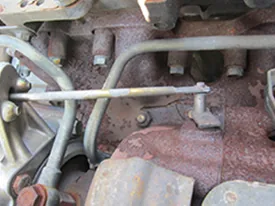
Turbo actuator stuck on this truck.
 Fix first
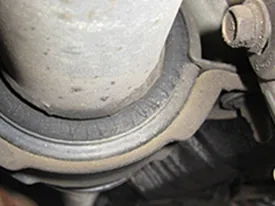
Mid shaft bearing rubber worn out, bad, drive shaft loose.
Letters from customers of ACE Auto Inspectors, the Metro Atlanta mobile inspection service this site grew out of.
I was thoroughly impressed with the services of Ace Auto Inspection. I located a car in the Atlanta area, contacted ACE and, within 24 hours, my inspector, Ron, was on site and evaluating the vehicle. […]
Thank you Ron for being so helpful, explaining to both Timi and I what you were doing, why and the suggested fix.
Buying across the state line? Each page covers that state's title, inspection and warranty rules.
Not a condition inspection. A car already titled in Kentucky needs no inspection to transfer. A car from another state needs the sheriff's inspection, which checks the VIN and paperwork only.
Fifteen days from the purchase. You do it at the county clerk, where you also pay the 6% usage tax.
Yes. The seller signs the back of the title in front of a notary. Many clerks' offices and banks have one.
No. The brand must be disclosed, dealers use a rebuilt sticker and a signed buyer form, and without that form you can void the sale within 45 days of the title being issued (cars over 10 model years old are excluded).
No. The lemon law covers new vehicles. Used cars are usually sold as is unless the dealer gives a written warranty, so an inspection before you pay matters more here.
What an inspection can't do. An inspection reports what can be seen and tested on the day, without taking the car apart. It can't promise that nothing will fail later, and it is not a warranty. Hidden frame repairs, intermittent faults and wear inside the engine or gearbox may not show.